Product design services:
UX/UI designed by the people who will build it
Kinetico Agency is a product design and engineering studio in Pokhara, Nepal. Its product design services — flows, every screen and state, and a coded design system — are done by the same senior team that writes the code, so nothing is designed that cannot be built. Design is 20–25% of a fixed-price build ($15,000–$50,000, 6–12 weeks), runs one to two weeks ahead of engineering, and is yours at handover, Figma files and design system included.
What do Kinetico's UX/UI product design services include?
Flows, screens, every state, and a design system you can actually build against — not a pretty deck. Each line below says where the deliverable lives, because half of it lives in your repository, not only in Figma.
| Deliverable | What it is | Where it lives |
|---|---|---|
| Flows and information architecture | Every workflow in the written scope, end to end, per role — before a single screen is drawn | Figma; the data model in the repo from week 1 |
| Screens, per role | Every screen for every role in scope — role one in week 2, role two and admin in week 3 of a Standard build | Figma → components in the repo |
| Every state | Empty, loading, error, edge and permission states for every screen — designed by week 5, because the same people have to build them | Figma and the component library |
| Interaction and motion | Transitions, feedback and timing that make the interface legible; see our 700ms rule for enterprise apps | Tokens and components in the repo |
| Design system | Colour, type and spacing tokens, components and their states — a system engineering builds against, not a style guide | The repository; Figma is a view of the same system |
| Design QA | The designer checks the running build against the design in week 6 — not static mocks | Fixes land in the same repo the same week |
| Handover | Figma files, the coded design system and its documentation, in your name | Your GitHub organization and your Figma |
Two of our own essays are the working notes behind two of those rows: the 700ms rule for motion in enterprise apps, and when to keep friction in a UX for the states most first versions forget.
Which kinds of product design work does Kinetico take?
Three shapes. All are bought the same way — a written scope and one fixed number — and all produce the same deliverables in your name.
| Shape | Who it is for | You get | Priced as |
|---|---|---|---|
| Design inside a fixed-price build More → | Founders building a first version, or a next version, with Kinetico | Everything in the deliverables table, running 1–2 weeks ahead of engineering, by the people who build it | 20–25% of the fixed price — inside the one written scope; see pricing |
| Design your own engineers will build More → | Teams with engineers and a product lead who need the design done properly — every state, a coded design system | The same deliverables and the same design system, handed over in your name, with documentation any team can build against | Written scope and one fixed number within 5 working days of a 30-minute call |
| Redesign of a product built without a designer More → | A first version that works but leaks users — inconsistent screens, missing states, no system | A scoped next version: the redesign designed and built the same way as a first version | Per version: cost and weeks in writing before any work starts |
What changes when the designers are also the engineers?
The design-to-development handoff is where two-vendor products lose weeks: unspecified states, drifting design systems, QA against mocks, nobody owning the gap. With one team the stage does not exist. Six places where that shows up:
| Step | Design agency + separate dev team | Kinetico — same people |
|---|---|---|
| Specifying the screens | Designer annotates Figma; developer reads it later; questions arrive after the designer has moved on | The person who drew the screen writes the component; unspecified states are noticed while designing |
| States and edge cases | Happy path is designed; empty, error, loading and permission states are guessed at in code | Every state is designed in week 5 at the latest, because the same people will have to build it |
| Design system | Tokens live in Figma; a second copy is hand-built in code; the two drift | Tokens and components live in the repo; Figma is a view of the same system |
| Design QA | Against static mocks, if at all; 'looks close enough' ships | Against the running build, week 6, by the designer who is also on the build |
| Change during the build | A change touches two vendors, two backlogs and two invoices | One conversation; same-size swaps absorbed, additions written up with weeks and cost |
| Who owns the gap | Nobody — each vendor did their part | The team; there is no gap to own |
The business case for design done this way — what interface changes did to conversion on real builds — is in the ROI of UX design; the week-by-week process, with the handoff stage removed, is in the MVP development process.
How long does product design take, and when does each piece land?
Design runs one to two weeks ahead of engineering inside the same team. This is the published Standard 8-week calendar — the design column is what this page sells; the engineering column is why it works.
| Week | Design | Engineering |
|---|---|---|
| Week 1 | Scope locked; data model; core flows | Repo, CI, auth, database |
| Week 2 | Role-one screens, all states | Core object CRUD; first deployed demo |
| Week 3 | Role-two / admin screens | Core workflow end to end |
| Week 4 | Payments and settings screens | Admin, roles and permissions |
| Week 5 | Empty, error and edge states | Payments or integrations wired |
| Week 6 | Design QA against the build | Notifications, settings, polish |
| Week 7 | Handover files, design system docs | QA, performance, monitoring |
| Week 8 | — | Production deploy, docs, handover |
What is in the design system, and why does it live in the repository?
Because a design system that lives only in Figma is a second copy of the product that drifts from the first. Ours is coded: tokens and components in the repository, Figma as a view of the same system. That is what makes a redesign a change list rather than a rewrite, and what lets your own engineers build against it later.
| Layer | In Figma | In the repository |
|---|---|---|
| Tokens | Colour, type scale, spacing, radius, elevation as Figma variables | The same tokens as code — one source the components import |
| Components | Component set with variants and every state | Typed React components with the same variants and states |
| Patterns | Forms, tables, empty states, permission states, error handling | Composed from the components; used by every screen |
| Motion | Timing and easing spec per transition | Motion tokens; transitions implemented once, reused everywhere |
| Documentation | Usage notes on the component set | Design-system docs handed over in week 7, in your name |
How much does product design cost with Kinetico?
Design is 20 – 25% of a fixed-price build. On a $30,000 Standard first version that is about $6,900; on the published band ($15,000–$50,000) it is the design line of one written scope, not an hourly rate or a per-screen fee. Design work on its own is quoted the same way — a written scope and one fixed number within 5 working days.
Where design sits in the price
| Phase | Share | $30k example |
|---|---|---|
| Scoping & product definition | 5 – 10% | $2,100 |
| Product design | 20 – 25% | $6,900 |
| Engineering | 50 – 60% | $17,100 |
| QA, launch, handover | 10 – 15% | $3,900 |
What the agencies on this query publish
Most UX design agencies do not publish a price. Digital Scientists gives “$20,000–$25,000 per month with a dedicated team” and 3–9 months for full engagements; Udig packages design at 2–3 weeks or 6–12 weeks with no dollar figure; Halo Lab (120 full-time staff) lists no rates and offers a 3-day trial. Kinetico's number is inside the published tiers — and the design is built by the people who drew it.
Who is this product design service for — and who should look elsewhere?
A good fit
- Founders building a first version who want the design and the build from one accountable team, at one fixed price.
- SaaS and B2B products with roles, permissions, dashboards and admin — where states and a system matter more than a landing page.
- Teams with their own engineers who want a design they can build without a handoff meeting: every state, a coded design system, documentation.
- A first version built without a designer that needs a scoped redesign, not a rewrite.
Not a fit — and where to go instead
- A standalone research programme, personas and a strategy deck with no product decision attached — a UX research consultancy.
- A designer embedded in your team under your own product lead — that is staff augmentation, which we don't sell; see staff augmentation vs outsourcing.
- Brand identity with no product behind it — a branding agency. (Brand for a product we are building is scoped separately; see Loam.)
- Enterprise DesignOps across many teams and $250k+ programmes — a large agency is built for that; we are not.
What has Kinetico designed — and shipped?
Every design below is in production or in the studio's own hands, built by the people who drew it: two product systems and four self-initiated pieces in motion, WebGL and brand art direction.
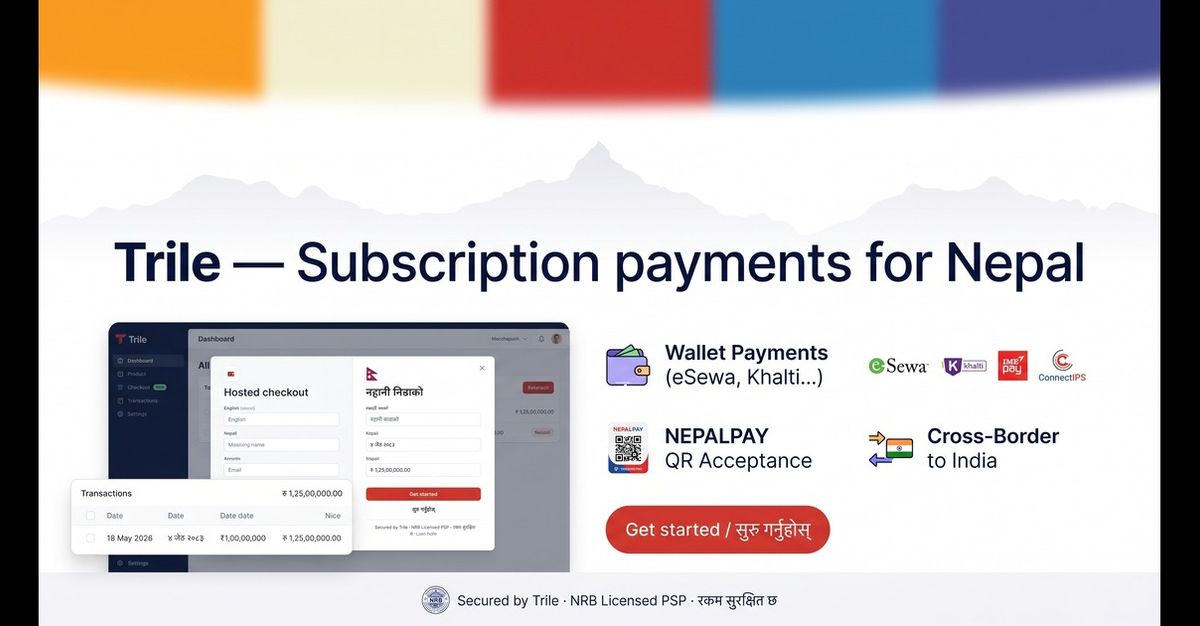
Trile — six applications, one system
Hosted checkout, merchant dashboard, admin console and wallet flows on one coded design system, so a change to a token or a state lands everywhere. Designed and built by Kinetico.
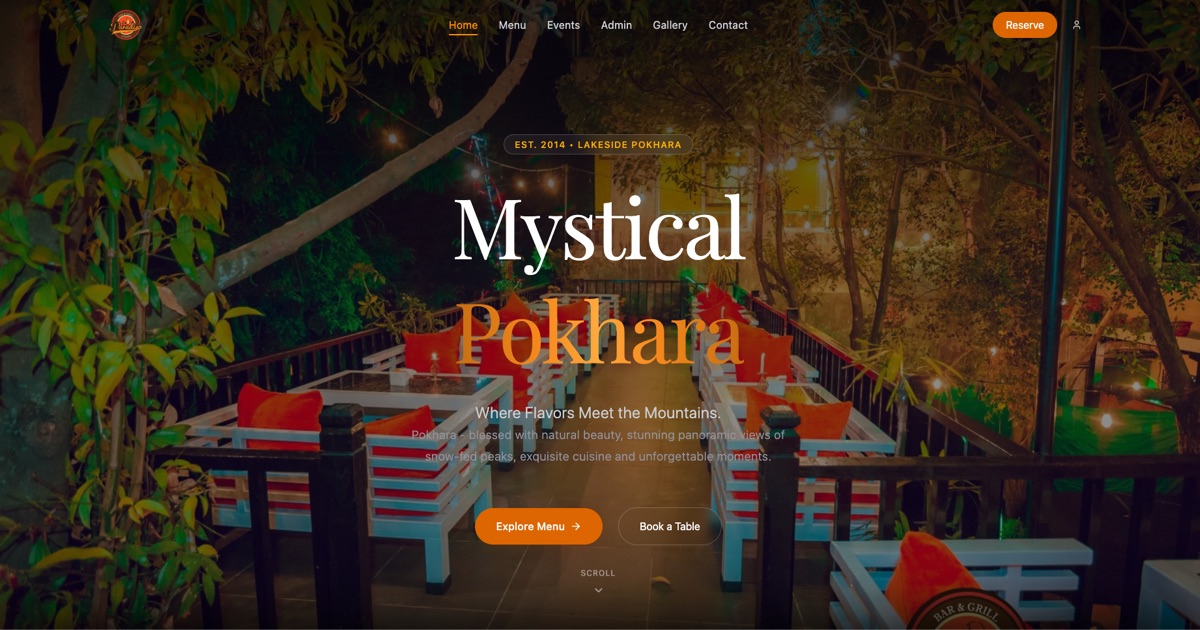
Paradiso — a floor plan you book from
Pick a table off the plan, hold it, pay by QR, arrive with a verifiable code — plus the console the floor runs on. Designed and built by Kinetico.
Product design services — frequently asked questions
- What do Kinetico's product design services include?
- Flows and information architecture, every screen for every role in the written scope, every state of every screen (empty, loading, error, edge, permission), interaction and motion, and a design system whose tokens and components live in the repository as well as in Figma. Design QA is done against the running build, and the Figma files and design-system documentation are handed over in your name.
- How much does product design cost with Kinetico?
- Design is 20–25% of a fixed-price build — on a $30,000 Standard first version that is about $6,900 — and is quoted as part of the one written scope, not billed by the hour or by the screen. Design work on its own, for a product your own engineers will build, is scoped the same way: a written scope and one fixed number within 5 working days of a 30-minute call.
- Can we have Kinetico design the product and build it with our own engineers?
- Yes. You receive the same deliverables — flows, every screen and state, a coded design system with tokens and components, and documentation — in your name, and any engineering team can build against them. Bring the problem, the roles and whatever exists to the scoping call; the written scope says exactly which screens and states you get.
- How long does product design take?
- Inside a build, design runs one to two weeks ahead of engineering: core flows and the data model in week 1, role-one screens with all states in week 2, role-two and admin screens in week 3, every remaining state by week 5, design QA against the running build in week 6, handover files and design-system docs in week 7. That is the published Standard 8-week calendar; Lean and Full compress or extend it.
- Do you do user research and usability testing?
- Scoping starts from the problem, who has it, the workflow that solves it and whatever exists — a deck, a spreadsheet, a prototype, a live product. Design is validated the way founders actually learn: a deployed, signed-in build every week from week two, in front of you and your users, with same-size changes absorbed. If you need a standalone research programme before any product decision, a research consultancy is the better buy.
- Do you work in Figma, and who owns the design files?
- Yes — Figma plus a coded design system. Tokens and components live in the repository so the design and the product cannot drift apart; Figma is a view of the same system. At handover the Figma files, the design system and its documentation are yours, in your name, with no licence or lock-in.
- Should I hire a UX designer, a design agency, or Kinetico?
- Hire a UX designer when you already have engineers and a product lead who can direct daily. Hire a design agency when you want research and design deliverables handed to a separate build team and you have someone to own the gap between them. Hire Kinetico when you want the design and the build done by the same senior people at one fixed price — or an approved design your engineers can build without a handoff meeting.
- Do you redesign existing products, and do you do brand identity?
- Redesign: yes, as a scoped next version — bring what is live and the change list, and the redesign is designed and built the same way as a first version. Brand and identity (name, mark, type, voice) is scoped separately when the product needs one; Loam in our work is an example.
Who wrote this, and where the numbers come from
Written by the Kinetico team. Kinetico Agency is a product design and engineering studio in Pokhara, Nepal, where the same senior team designs the product and writes the code that ships it. The phase split, calendar and band on this page are the studio's published engagement terms — the same numbers as on pricing and the other service pages — calibrated on shipped work: Trile (one design system across six surfaces) and Paradiso (in production). Vendor facts are taken from each vendor's own page, fetched 2026-08-17 and linked where quoted.
Published 2026-08-17 · Last reviewed 2026-08-17 · Kinetico Agency, Pokhara
What to ask next
- →What does the whole build include — tiers, calendar, handover?
- →Do you also build from a design we already have?
- →What does Kinetico charge, and what moves the number?
- →What stack does the design system get built in?
- →What did interface changes do to conversion?
- →When should a UX keep friction in?
- →How do you design UX for AI products?
- →How do you turn dense financial data into a usable dashboard?
- →What does the process look like, week by week?
Book a 30-minute scoping call
Bring the problem, the roles, and whatever exists — a deck, a prototype, a live product. You leave with a written scope and one number within five working days, whether we build it or your engineers do.
Prefer email? hello@kinetico.agency