01
Product design
Flows, screens, every state, and a design system engineering builds against — designed by the people who will write the code.
Kinetico Agency is a product design and engineering studio in Pokhara, Nepal, that does software development for startups: the same senior team designs the product and writes the TypeScript that ships it, in your GitHub organization from the first commit. A first version costs $15,000–$50,000, fixed after one scoping call, and takes 6–12 weeks. Later versions are scoped and priced the same way — no retainer required in between.
Everything between a problem statement (or an approved design) and a product in production, done by one team — so nothing is lost between a design vendor and a build vendor, and no one has to translate a Figma file into a spec.
Flows, screens, every state, and a design system engineering builds against — designed by the people who will write the code.
TypeScript end to end: React/Next.js frontend, NestJS API, PostgreSQL. Auth, roles and permissions, payments, integrations, notifications, admin.
Production deployment, monitoring, documentation and handover — in your accounts, with the bill in your name.
Name, mark, type and voice, if the product doesn't have one yet. Scoped separately; see Loam in our work.
Three shapes, all bought the same way — a written scope and one fixed number, never an hourly rate. What we don't sell: staff augmentation, and $250k+ enterprise programmes.
| Shape | You bring | You get | Priced as |
|---|---|---|---|
| A first version, from an idea MVP development → | The problem, the constraint (budget and date), whatever exists — a deck, a spreadsheet, a no-code prototype | Scoping, product design, engineering, production deploy and handover of a v1 your users can sign into | Fixed price after one scoping call: $15k – $50k, 6 – 12 weeks |
| A build, from an approved design How scoping works → | A Figma file or design system from your designer, and the same problem statement | The missing states (empty, error, edge, loading), a coded design system in the repo, and the working product | Written scope and one fixed number within 5 working days; weeks set by scope |
| The next version, of a product we built or one you already have What happens after v1 → | What is live, its repository, and the change list usage has produced — new roles, integrations, billing, reporting | A scoped set of changes designed, built and deployed the same way as a first version | Per version: cost and weeks in writing before any work starts. No retainer. |
If you need engineers inside your own team under your own technical lead, that is a dedicated team or staff augmentation — a different product, sold by different vendors. Our comparison of staff augmentation, dev shops and product studios says where each fits.
A first version with Kinetico is $15,000–$50,000, fixed after one scoping call. Which end of the band you land on is set by scope — roles × screens × integrations — not by hourly rate. The three tiers below cover almost every first version we are asked to build; a build from an approved design or a next version is quoted the same way, against its own written scope.
| Tier | Weeks | Fixed price | What's in scope | What it proves |
|---|---|---|---|---|
| Lean | 6 | $15k – $22k | 1 user role · 6–10 screens · auth + one core workflow · 0–1 integration | Will anyone use the core loop at all? |
| Standard | 8 | $22k – $35k | 2 roles · 12–20 screens · core workflow + admin · payments or 2 integrations | Will they pay, and can you operate it? |
| Full | 10 – 12 | $35k – $50k | 3 roles · 20–30 screens · billing, notifications, reporting · 3+ integrations | Can this run as a business, not a demo? |
2026 ranges for a comparable first version, by who builds it, rounded to bands. The large vendors on page one for this query publish wider numbers still: ScienceSoft puts MVP development at $40,000–$300,000 over 2–6 months, and Belitsoft gives 2–6 months to launch and no price at all.
| Who builds it | First version | Weeks | Note |
|---|---|---|---|
| Freelancer | $10k – $40k | 8 – 16 | One person, one skill set; design and QA usually thin |
| Design + engineering studio (Nepal / South Asia) | $15k – $50k, fixed | 6 – 12 | Kinetico's published tiers; one team, code in your repo, no retainer |
| Offshore dev shop (Eastern Europe / LATAM) | $30k – $80k | 8 – 14 | Design often subcontracted → handoff loss |
| US / Western European agency | $60k – $200k+ | 10 – 20 | Highest rate; often the same seniority you can hire elsewhere |
What moves the number and what is not included are on the pricing page. Where the money goes inside a build — scoping 5–10%, design 20–25%, engineering 50–60%, QA and handover 10–15% — and what it costs to run after launch is in software development cost, broken down and web app development cost by product type.
Five steps, one team, no handoff. Design runs one to two weeks ahead of engineering inside the same group of people, and you see a deployed, signed-in build every week from week two. Scoping, demos and reviews are scheduled inside your working hours; the build runs asynchronously in between, from Pokhara (UTC+5:45), and you talk to the people doing the work — not an account manager.
30 minutes. You bring the problem, the constraint, and whatever exists — a deck, a Figma file, a spreadsheet, a no-code prototype, or a live product and its repository.
Modules, screens, states, integrations, weeks, and one number. Nothing starts until you have this in writing.
Flows, screens, every state, and a design system engineering builds against. Designed by the people who will build it, so there is nothing to hand off.
A signed-in, deployed build every week from week two. TypeScript end to end, in your GitHub organization from the first commit.
Production deploy, monitoring, documentation, and the accounts. You own the repository, the design files, and the infrastructure.
The week-by-week version of a Standard build, with what design and engineering are each doing, is in the MVP development process.
“Production” is a checklist, not an adjective. Every version Kinetico ships — first or fifth — includes the nine items below, in your name, before we call it done.
| Item | What you get | Why it is in scope |
|---|---|---|
| Repository | Your GitHub organization, from the first commit, with the full history | Ownership is a fact from day one, not a clause to enforce at the end |
| Continuous integration | Repo, CI, auth and database are the week-1 deliverables of every build | Every push is built and checked; the weekly demo is a real deploy, not a screen recording |
| Auth, roles and permissions | The roles in the written scope, with an admin console where the scope has one | Most first versions that skip admin build it in a panic by month two |
| Tests in the QA line | QA and handover carry 10–15% of the budget; tests stay in that line rather than being cut for scope | The next version is a change list, not a rewrite |
| Production deployment | Vercel and a managed Postgres, or your cloud — in your accounts, with the bill in your name | Scaling down after launch means paying less, not losing the product |
| Monitoring | In place at handover, in your accounts | You find out about errors before your users tell you |
| Coded design system | Tokens and components live in the repository | The design and the product cannot drift apart after handover |
| Documentation | How it is deployed, how it is run, what every module does | An engineer you hire later can start without us |
| Third-party accounts | Payments, email, analytics — created under your ownership | No vendor lock-in through someone else's API keys |
Deliberately boring: TypeScript everywhere, React with Next.js, NestJS, PostgreSQL. Chosen so that the engineers you hire after launch already know it, and so a small team can work anywhere in the codebase. We don't pick a stack per project; we pick the one that keeps your hiring pool largest. The full case for it — when Next.js, when plain React, what sits around them — is on the Next.js and React development page.
| Layer | Choice | Why |
|---|---|---|
| Language | TypeScript, end to end | One language across design tokens, frontend, backend and scripts; the same people can work anywhere in the codebase. |
| Frontend | React with Next.js | Server rendering by default, the largest hiring pool, no lock-in. |
| Backend | NestJS | Structured, typed, testable; the boring choice that the next engineer already knows. |
| Database | PostgreSQL (Drizzle ORM) | Relational from day one — most MVPs that 'don't need SQL yet' need it by month three. |
| Hosting | Vercel + a managed Postgres, or your cloud | Deploy in your accounts, monitored, with the bill in your name. |
| Design | Figma + a coded design system | Tokens and components live in the repo, so the design and the product cannot drift apart. |
One question decides most of it: do you have a technical lead who can own the spec and review the work every week? If yes, you can buy capacity. If no, you should buy an outcome. The vendors that rank for “software development for startups” mostly sell capacity at enterprise scale — ScienceSoft (750+ IT specialists; dedicated teams and staff augmentation), Belitsoft (250+ developers; dedicated developers) and Talentica (500+ engineers, 200+ startups; teams you scale up and down). Kinetico is the opposite shape: a small senior team that sells one fixed-price outcome at a time.
| Model | Who directs | What you get | Works when | Fails when |
|---|---|---|---|---|
| Freelancer | You, daily | One skill set, hourly or per task | Bounded tasks: a landing page, an integration, a fix | A whole product — design, backend, QA and ops rarely live in one person |
| Dev shop, time & materials | You (or your PM) | Engineers executing your spec, billed hourly | You have a technical lead who owns the spec and reviews the code | Non-technical founder + hourly billing = scope drift you pay for |
| Dedicated team / staff augmentation | You, daily, through your tech lead | Named engineers embedded in your process, per person per month | You already have a product and an engineering lead and need capacity | You have neither — nobody is steering |
| Fixed-price version from one team (Kinetico) | Shared: you own the what, the studio owns the how | Scoping, design, build, launch and handover from the same senior people, at a number agreed up front | Funded founders without a technical cofounder who need a real version in weeks | Enterprise programmes, or when you want to direct engineers day to day |
Vendors recommend the model they sell — including us. The longer treatment, with the failure modes and their contract fixes, is in outsourcing software development for startups; the like-for-like read across ten vendors is our comparison of MVP development companies.
Two production systems designed and engineered end to end by this team — one our own platform, one client work — plus self-initiated studio pieces. About 2,200 TypeScript files written and maintained across them.
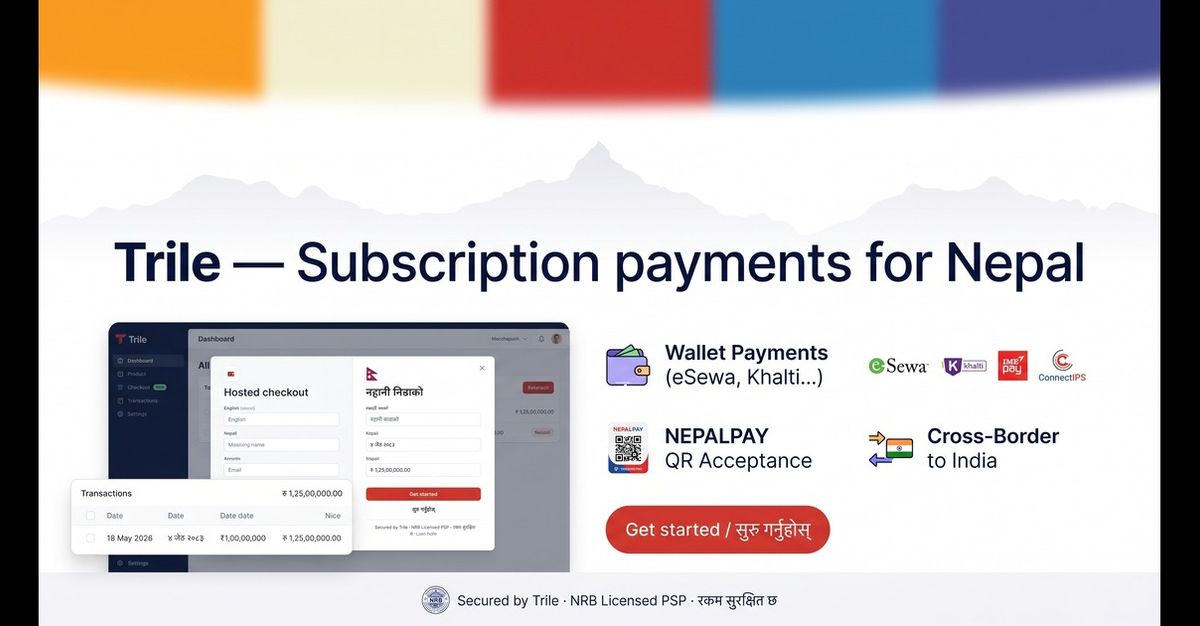
Wallet-funded subscriptions, a paisa-precise double-entry ledger, hosted checkout, merchant dashboard and admin console. Designed and built by Kinetico.
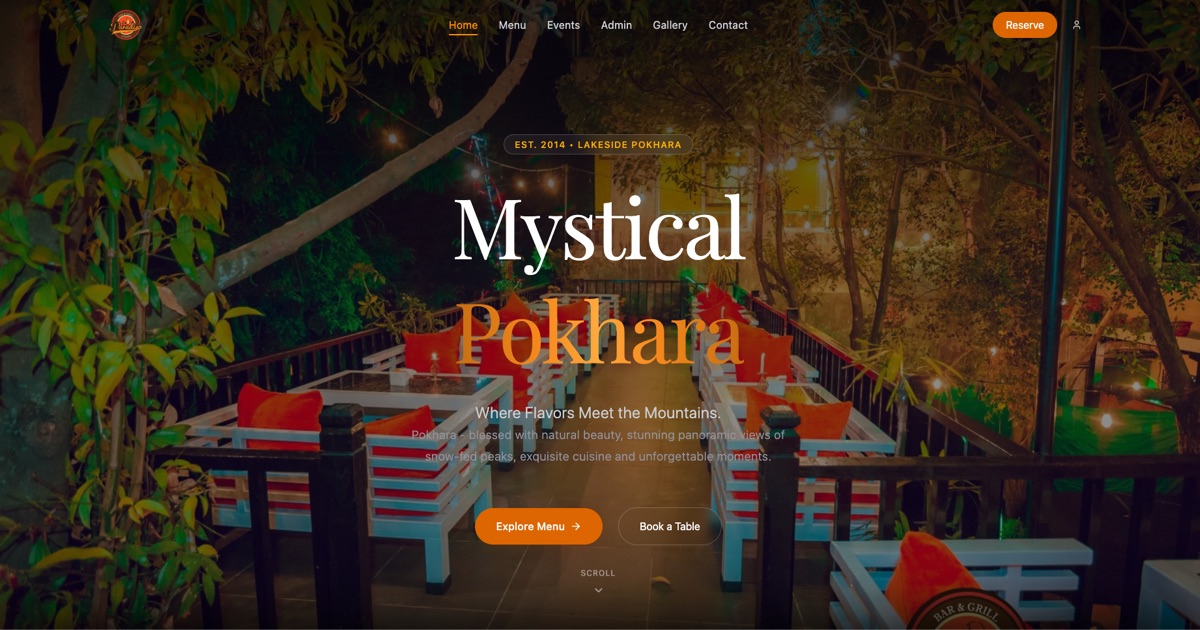
Pick a table off the floor plan, hold it, pay by Fonepay QR, arrive with a verifiable code — plus the admin console the floor runs on. Designed and built by Kinetico.
Handover, then whatever usage teaches you. At handover everything is in your name — there is no licence, retainer or lock-in required to keep running what we built. From there you have three options, and they combine: come back for the next scoped version, hire your own engineers into the repository (the stack was chosen so they already know it), or both.
A next version is bought exactly like a first one: the change list becomes a written scope with its cost and weeks before any work starts, so the number only moves when you decide it should.
Written by the Kinetico team. Kinetico Agency is a product design and engineering studio in Pokhara, Nepal, where the same senior team designs the product and writes the code that ships it. Prices and timelines are the studio's published engagement band ($15k–$50k, 6–12 weeks), split into the scope tiers we quote and calibrated on shipped work — Trile (payments and billing, six apps on one API) and Paradiso (hospitality booking, in production). Market ranges are 2026 figures published by other builders, rounded to bands; vendor facts are taken from each vendor's own page, fetched 2026-08-17 and linked where quoted.
Published 2026-08-17 · Last reviewed 2026-08-17 · Kinetico Agency, Pokhara
Bring the problem and the constraint — or the design, or the live product. You leave with a written scope and a fixed number within five working days, and if a studio is the wrong shape for your stage, we will say so.
Prefer email? hello@kinetico.agency